Player Profile: Randall Cobb
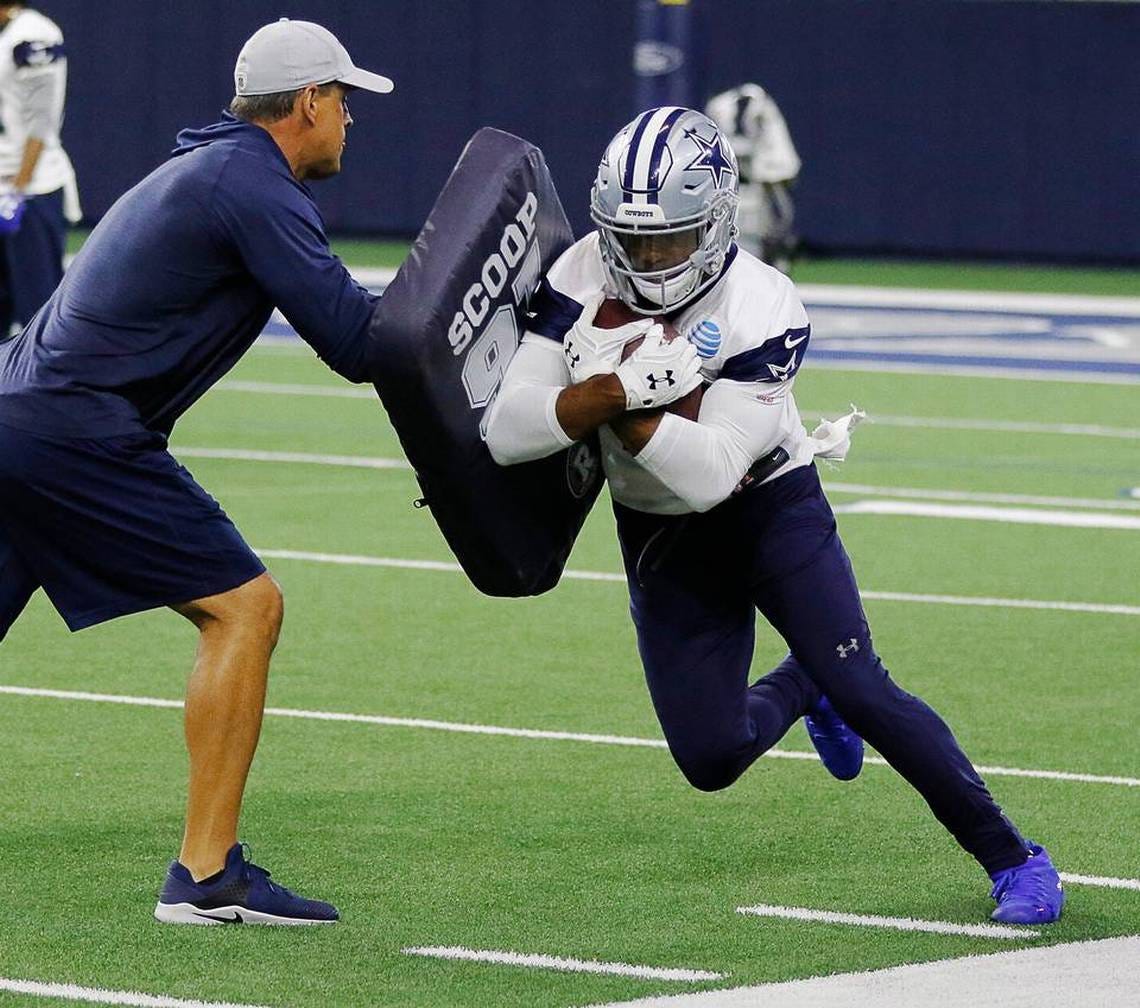
It’s fair to say few teams, if any, had a worse situation at wide receiver in 2018 than the Dallas Cowboys. After letting Dez Bryant walk and seeing Jason Witten retire, there was a glaring opening in the receiving corps that just wasn’t being filled by Allen Hurns, Cole Beasley, Michael Gallup and Terrance Williams.
Fortunately for Dallas, they were able to acquire Amari Cooper in the middle of the year. In nine games for Dallas, Cooper had 76 targets, accounting for 53 receptions, 725 yards and six touchdowns. And the Cowboys made the playoffs. But to make it further, the offense needs more firepower. Thankfully for the Cowboys they have Cooper for a full season, and Witten has unretired. But that’s not enough.
That’s what makes the signing of former Packer receiver Randall Cobb so interesting. The hope for Dallas is that Cobb finds some of that old magic in helping the Cowboys defend their NFC East crown in 2019.
A talented target
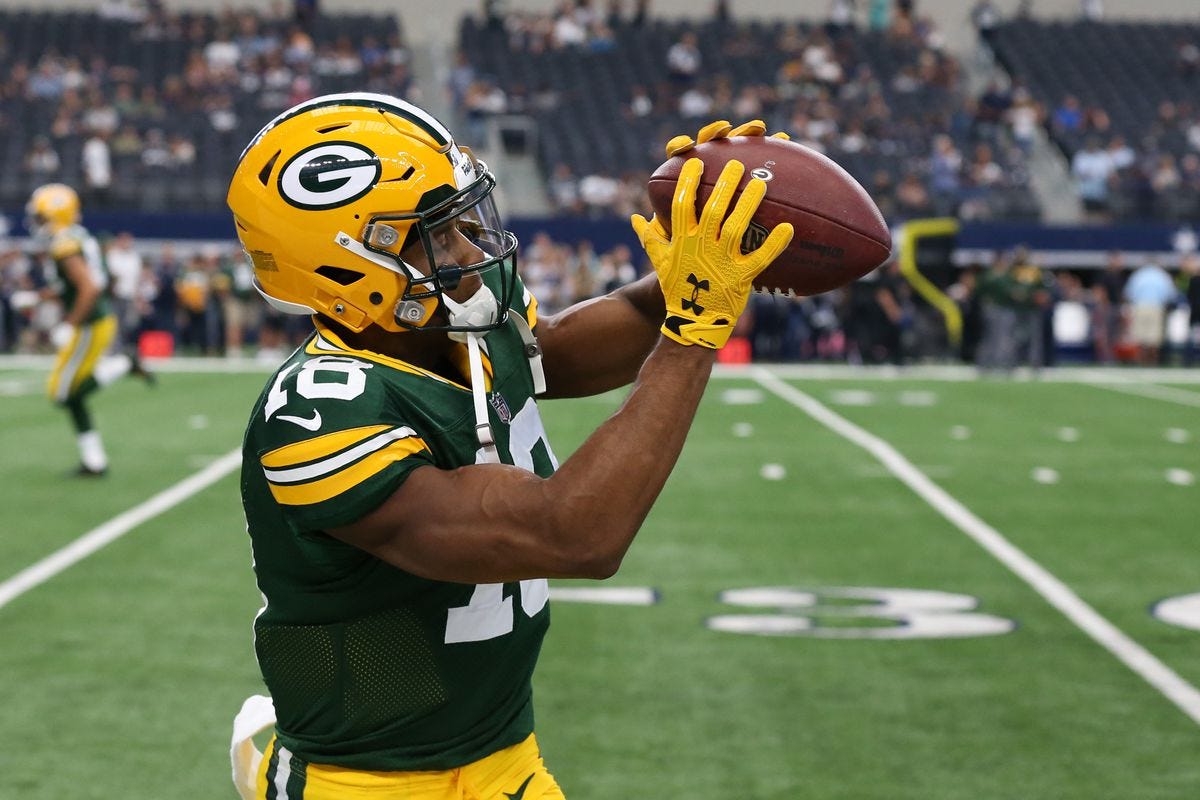
Cobb comes to Dallas from the Aaron Rodgers-led Packer offense, where he’s spent his entire career. In eight seasons, Cobb produced 473 receptions for 5,524 yards and 41 TDs. His talent has never been a question. In his lone Pro Bowl year in 2014, Cobb started all 16 games for the Packers. He caught 91 passes for 1,287 yards and 12 TDs. The problem is that is the only one of his eight seasons where he started 16 games, and one of only two years where he played all 16 games.
In 2018, with Jordy Nelson shipped off to Oakland, there seemed to be a prime opportunity for Cobb to shine opposite Davante Adams. Instead, Cobb was limited to nine games, starting six. He managed only 38 receptions for 383 yards and two TDs on 61 targets. His age and cost made him expendable in Green Bay.
Fortunately, he found a soft place to land in Dallas, a team in desperate need of production at the wide receiver spot. He signed a one year deal worth $4.5 million. It gives Dallas a potential weapon at a discount, and gives Cobb a chance to prove his worth outside of the high-octane offense in Green Bay on a prove it deal.
But is there a chance to thrive?
The outlook in Dallas
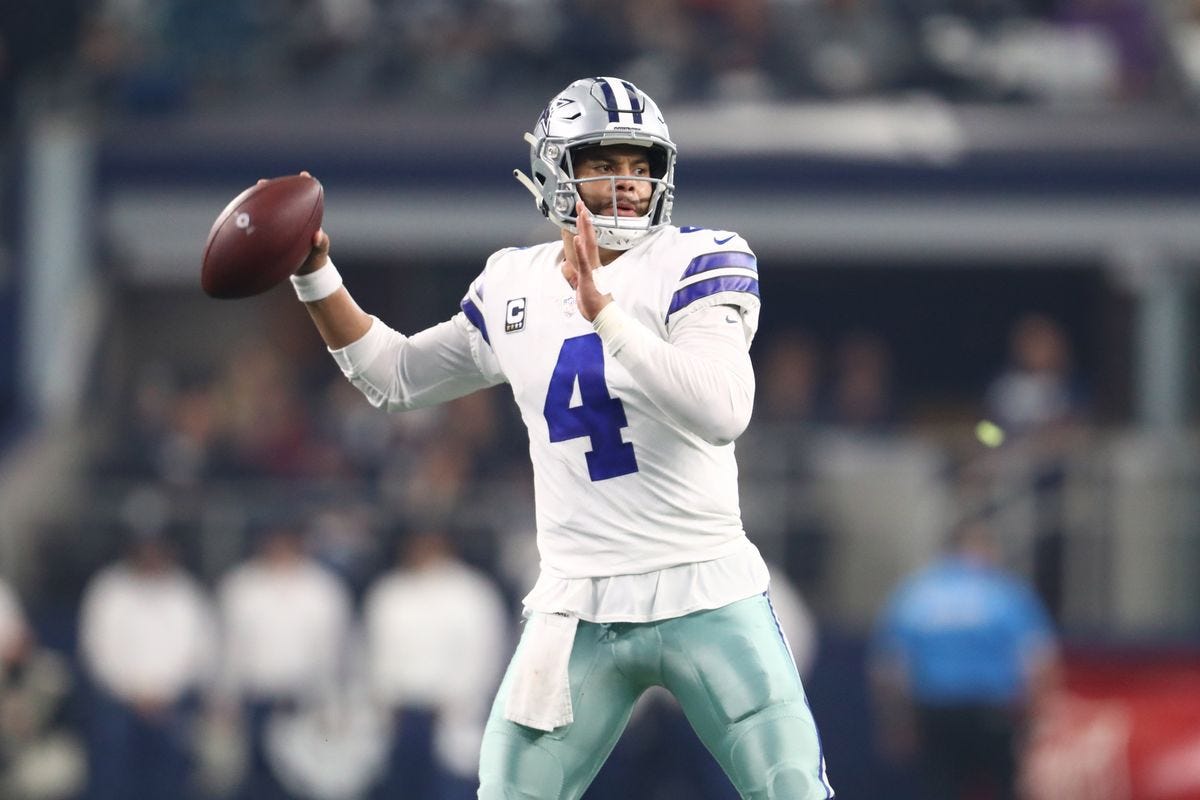
The Cowboys didn’t get a lot of great production at wide receiver in 2018. Their best weapon throughout the season was Cole Beasley. The slot receiver produced 65 catches for 672 yards and three TDs on 87 targets. But in the off-season, Beasley signed with the Buffalo Bills, taking his targets with him.
Next in the pecking order was Hurns, who mustered just 20 catches for 295 yards and two TDs, and was injured seriously in the playoffs, meaning he’ll likely be slowed to return in 2019. Rookie Gallup mustered 33 receptions for 507 yards and two TDs against 68 targets. The tight end trio of Geoff Swaim, Blake Jarwin and Dalton Schultz, who filled in for Witten, combined for 65 receptions for 665 yards and four TDs on 85 targets.
So what does that mean for the Dallas offense in 2019? While Beasley is gone and Hurns will be slowed, Witten is back and Gallup figures to grow in year two. But in 2017, his last full season, Witten played and started 16 games and accounted for 63 receptions, 560 yards and five TDs on 87 targets. Swaim is in Jacksonville, and even if Jarwin and Schultz get some snaps it seems likely their production combined with Witten wouldn’t be much more than the combined TE production in 2018.
Gallup, meanwhile, played in all 16 games last season and started eight. If anything, he could improve by just boosting his catch efficiency, which was a woeful 48.5 percent in 2018. That mark was worst among Cowboys’ receivers.
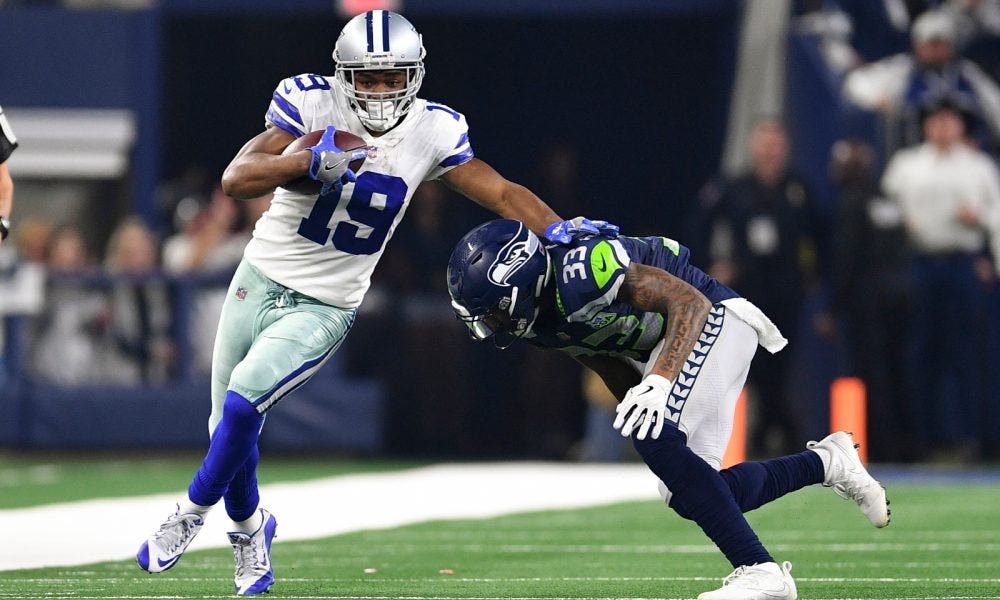
Perhaps the biggest competition for targets would figure to be Cooper, who nabbed 76 in just nine games last season. And Cooper figures to command a lot of attention. In his first two seasons in Oakland, he had 130 and 132 targets. But it’s that 2016 season for Oakland that might be the most instructive for the Cowboys.
In that season, the team went 12–4 and made the playoffs. Derek Carr threw for 3,937 in 15 games before breaking his leg, tossing 28 TDs along the way. Those are hardly earth-shattering figures for a modern-day passer. In fact, Prescott went for 3,885 and 22 TDs in 16 games last season. And in that 2016 Raiders’ season, Cooper drew 132 targets and caught 83 passes for 1,153 yards and five TDs. But he wasn’t even the best receiver on his own team. That was Michael Crabtree, who collected 149 targets for 89 catches for 1,003 yards and eight TDs. In addition, Seth Roberts got 77 targets, Clive Walford got 52 targets and Michael Rivera took 25 targets. The trio of Latvius Murray, DeAndre Washington and Jalen Richard combined for 105 targets.
In 2018, Ezekiel Elliott nabbed 95 targets to go with 77 receptions. Even assuming Elliott grabs 100 targets, Witten and the rest take 90 and Cooper gets to 130, that’s only 320 targets. The Cowboys threw 517 times last year, meaning about 200 targets would still be left to split among a receiving corps that consists of Gallup, Hurns and now Cobb.
In 2016, playing in only 13 games, Cobb got 84 targets, turning them into 60 receptions for 610 yards and four TDs. In 2017, playing 15 games, he got 92 targets, turning it into 66 receptions for 653 yards and four TDs. It’s easy to see him get in the 75–90 target range if he can stay healthy in this offense without it being significantly better than it was in 2018. And his career 69.6 percent catch rate suggests he knows what to do with them if he gets them.
Where to take Cobb
So, Cobb has done it in the past, Dallas has a void and even at 2018 levels there is a path for him to get work opposite Cooper with Elliott and Witten in the fold. The question is where would you want to draft Cobb? Last year Dede Westbrook was WR35 posting 66 receptions for 717 yards and five TDs. Realistically, that’s about what you’re hoping to get from Cobb, with the possibility that if he explodes, he could go higher, and if he’s injured he could end up much lower.
Cobb’s current ADP in PPR is 200 overall, WR70. Considering the possibility, his history and the relative lack of competition in Dallas, you could do worse in the later rounds than snatching Cobb as your WR5 and hoping for some production during bye weeks and down the stretch. After all, Cobb has something to prove if he wants to land a more lucrative contract next off-season.


Comments
Post a Comment